BRIDGEWATER LEADS GROUPS · PRACTICAL GUIDE
A job title starts the conversation. A thoughtful question gives it somewhere to go.
You learn that the person beside you is a photographer. They learn that you run a small business. There is a brief pause, and you both reach for your coffee.
That pause is a good place to get curious. You do not need an unusual icebreaker. Ask about something the other person can explain from experience, then give them room to answer.
Whether you are meeting someone in Pasadena, Azusa, or Santa Fe Springs, the aim is the same: leave with a clearer picture of the person and their work.
01 / START WITH THE WORK
Ask about a part of the job you can picture
Broad questions can be hard to answer on the spot. “Tell me everything about your business” leaves someone deciding where to begin. A smaller question offers a starting point.
- “What kind of project has been keeping you busy lately?” Lets them choose something current without revealing private client details.
- “Which part of your work do you most enjoy explaining to people?” Makes room for enthusiasm and expertise.
- “What usually happens before someone reaches out to you?” Helps you understand the situation behind a service.
Ask one question and follow the answer. A list is useful preparation, but it should not become a script you work through while the other person speaks.
02 / FOLLOW THEIR ANSWER
Find the interesting detail and stay with it
Imagine a photographer says that getting products ready takes more time than people expect. You could immediately describe your own scheduling problems. Or you could stay with the detail they just offered.
Illustrative conversation
You: “What does getting the products ready involve?”
Photographer: “Making sure the samples are complete and deciding which details need close-ups.”
You: “So the planning starts before anyone picks up a camera?”
That last question checks your understanding. It also gives the photographer a chance to explain something you might otherwise miss. Useful follow-up questions often begin with “How does that work?” or “What do you mean by…?”
03 / MAKE ROOM FOR BOTH PEOPLE
Share a little without taking over
A conversation needs contributions from both sides. If an answer connects to your own work, make that connection briefly and return the floor.
A natural way to contribute
“I recognize that planning issue from organizing workshops. We have to settle the room setup early, too. How far ahead do you usually start preparing for a shoot?”
You have added context without turning their answer into your presentation. If they ask about your work, answer directly. Our guide to introducing your business at a networking event can help you keep that explanation clear.
04 / CHOOSE THE MOMENT
Some questions are better saved for later
Early in a conversation, leave room for the other person to decide how much to share. Questions about revenue, difficult clients, personal problems, or confidential projects can ask for more than the setting allows.
“What is a common misunderstanding about your work?” is usually easier to answer than “What is your biggest business failure?” If they keep an answer brief, accept it and change direction.
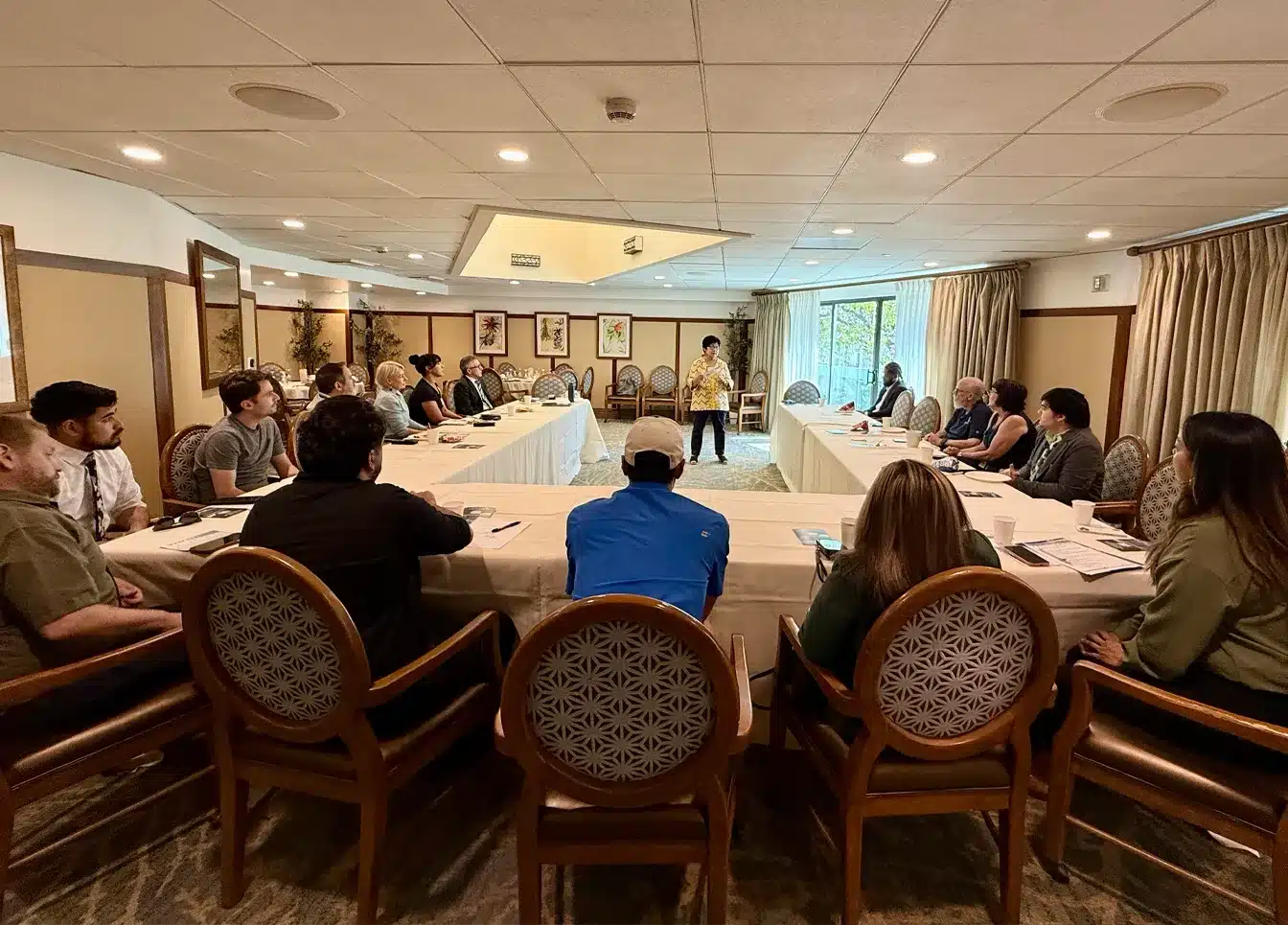
During a group presentation, choose a question that helps others understand the topic. Save a detailed question about your own situation for a separate conversation, and ask whether they have time before starting it.
05 / LEAVE A USEFUL OPENING
End with something you learned
When it is time to move on, name the detail you will remember: “I had not realized how much preparation goes into product photos. Thanks for walking me through it.”
If you would like to talk again, say what you want to explore. You do not need to force a meeting request into every exchange. A thoughtful conversation can stand on its own.
Choose two questions before your next meeting
Opening: What part of their work would you like to understand?
Follow-up: What could you ask if their answer interests you?
Once the conversation begins, let their answer guide the second question.