BRIDGEWATER LEADS GROUPS · PRACTICAL GUIDE
You can contribute something useful without having a name to pass along.
The meeting reaches the referral conversation, and you do not have one. It can be tempting to stretch a casual remark into a potential lead so you have something to report.
You do not need to manufacture an opportunity. A resource someone requested, a thoughtful question, or a small task you actually complete can be a worthwhile contribution to the group.
Start with what another person needs and what you can reasonably offer.
01 / NOTICE THE REQUEST
Share one relevant resource
Listen for a specific question. Someone planning a workshop may need a venue checklist. Someone preparing a presentation may want a clear example of a one-page handout.
If you already have something appropriate, offer it and explain why it fits. “I have a checklist with a section on room access and setup time. Would it be useful?” lets them decide.
Check that the resource is current and accessible before you send it. Avoid forwarding a pile of links that leaves the other person doing the sorting.
02 / OFFER A SMALL TASK
Make the help easy to accept
“Let me know if you need anything” is friendly, but it leaves someone else figuring out what to ask. A defined offer is easier to assess.
A bounded offer
“If you want a second pair of eyes, I can read the first page of your handout and tell you which parts I find unclear.”
A realistic limit
“I have fifteen minutes on Thursday. I can check the registration steps, but I cannot review the whole event plan.”
Ask before giving feedback, and keep it within your experience. Helpful participation does not require offering professional work for free or accepting every request.
03 / BE USEFUL IN THE ROOM
Help someone else participate
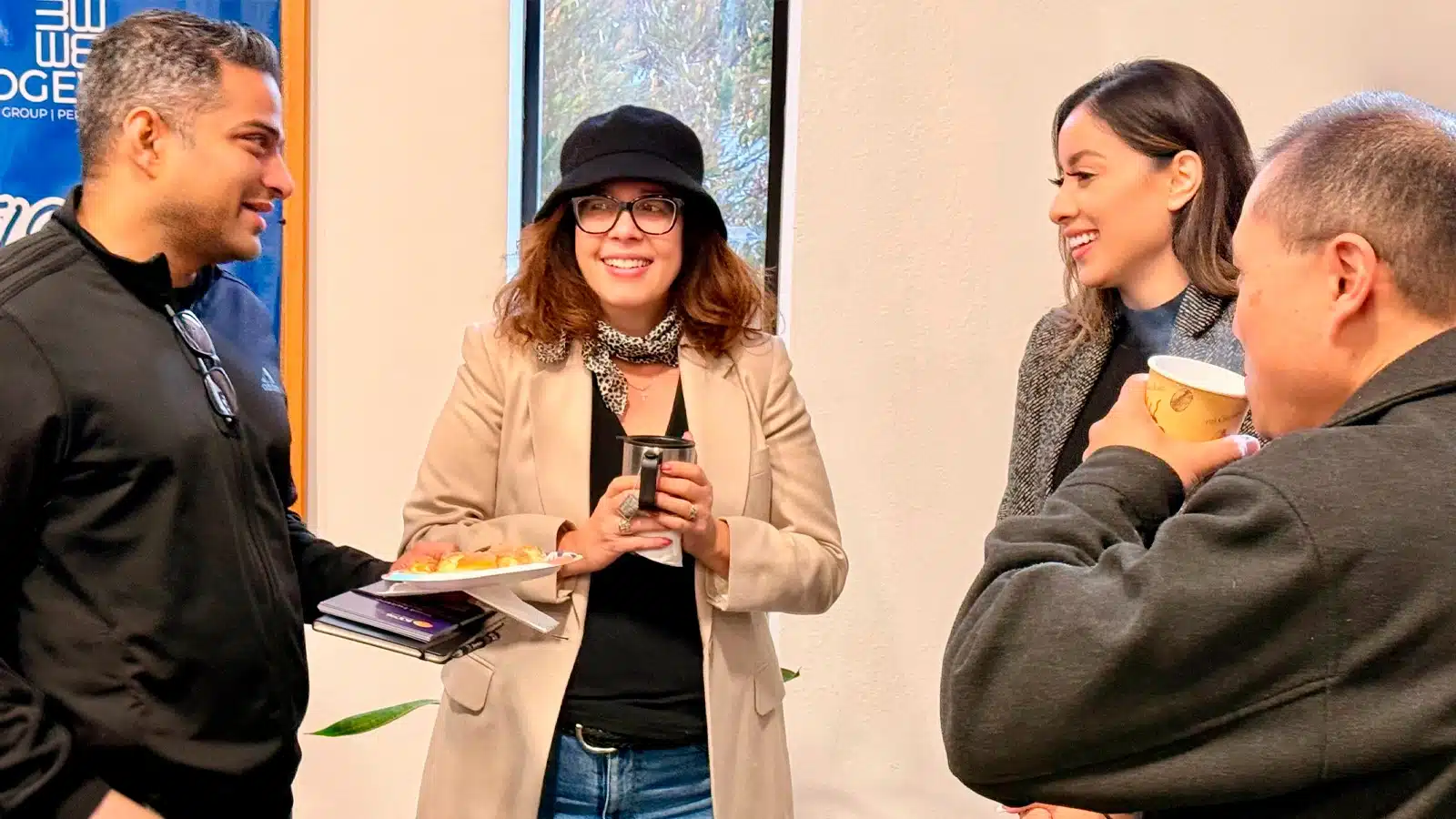
A visitor may be waiting for an opening to join a conversation. You can make space by introducing yourself, asking about their work, and bringing them into the discussion without putting them on the spot.
During a presentation, give the speaker your attention. If there is time for questions, ask something that helps the group understand the service rather than using your question to advertise your own business.
You can also ask the organizer whether there is a small task that needs help. Let them direct the support instead of assuming a role or changing the meeting format.
04 / SHARE WITH CONTEXT
Point people toward work you understand
If a member publishes an article that you found useful, share the link with a sentence explaining what helped you. A specific observation gives others a reason to open it.
Illustrative B | Connect post
“The section about preparing product samples helped me understand what happens before a photo shoot. Which preparation step do clients most often overlook?”
In B | Connect, that kind of question can start a discussion around an article. Describe what you actually read or experienced. Do not write a customer review for a service you have not used, or make an endorsement you cannot support.
05 / FOLLOW THROUGH
Keep the promise smaller than your available time
Choose one action and give it a realistic deadline. If your week changes, tell the person rather than letting the offer quietly disappear.
- The need: What did the person actually ask for?
- The offer: What can I do with the time and knowledge I have?
- The agreement: Do they want that help?
- The finish: When will I complete it?
These contributions do not create an obligation for someone to refer business back to you. If a suitable referral does emerge later, treat it with the care described in our article on building referral partnerships through trust.