
Earlier Sunsets in California: Driving and Walking Safely After the Time Change
Prepare for California’s November time change with a practical guide to driving, walking and school pickups after dark.
View details

Community Safety
A practical checklist for wet commutes, poor visibility and changing road conditions.
Request a Free ConsultationQuick Answer
Before a rainy drive, check your car and current route conditions. Use low-beam headlights, slow down, leave extra space and stay out of flooded roads. If conditions change, change the plan.
The rain starts halfway through the afternoon, just as you are leaving work for school pickup. Your usual route still looks familiar, but spray from traffic makes the signs harder to read and the pickup line is moving slowly.
Driving in the rain in California starts with a few decisions you can make before that moment. Use this guide to prepare your car, adjust the trip and recognize when to change your plan.
Caltrans’ winter-driving checklist covers additional preparation for mountain trips, including snow and chain controls.
The California DMV advises driving more slowly and leaving more space behind the vehicle ahead. Rain after a dry period can make pavement especially slippery as water mixes with accumulated oil and dust.
Reduce speed before a curve and make steering and braking inputs gently. Avoid abrupt lane changes. If traffic fills the space in front of you, ease back to rebuild it rather than trying to defend the gap.
The DMV’s headlight guidance says to use low beams when weather requires windshield wipers. Check the light controls instead of assuming the automatic setting has switched them on. Parking lights are not a substitute.
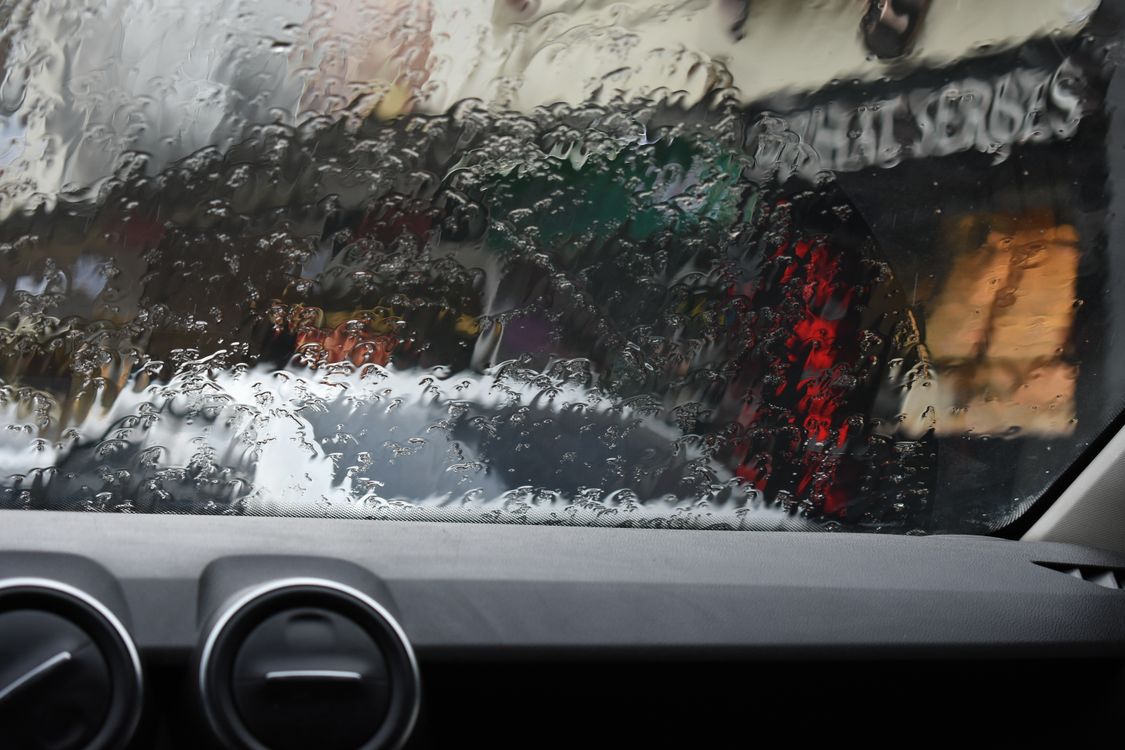
Hydroplaning happens when tires lose contact with the road and ride on water. The DMV advises slowing gradually and avoiding the brakes while hydroplaning. Avoid sudden steering movements. Reducing speed before standing water helps prevent losing traction in the first place.
Do not drive into floodwater or around a barricade. The National Weather Service warns that water can hide a damaged road and other hazards. A larger vehicle, a familiar street or another driver crossing ahead of you does not establish a safe path.
Imagine your trip between Santa Fe Springs and Orange County takes you toward a flooded underpass. The useful decision happens before entering it: follow closures, take a permitted alternate route or postpone the trip. Send an updated arrival time only after parking safely.
This is a planning example, not a report about conditions on a particular road.
If rising water traps you, call 911 when possible and follow emergency instructions. Do not walk into moving floodwater. Follow evacuation orders promptly rather than waiting for your regular route to become impassable.
Call 911 for an emergency and put immediate safety first. Do not stand in traffic or enter water to collect photographs.
Once safe, make a short record while the details are fresh:
Write observations separately from guesses about why the crash happened. If you have questions about an injury, request a free consultation with Bridgewater Law Group.
Start with the National Weather Service Los Angeles/Oxnard office for Los Angeles County or the San Diego office for Orange County. Use your destination’s forecast as well as the one for home. Check highway closures separately through Caltrans.
No. Prepare for the conditions on the trip you are making. Our El Niño and Southern California rainy-season article explains what a seasonal outlook can and cannot tell you.
Review your pickup location and crossings before leaving. Our guide to earlier sunsets in California helps families plan darker commutes and evening walks.
Sources checked October 13, 2026. Consult current alerts and follow official instructions for your location.
Drivers backing out may not see a bike, scooter, skateboard, or e-bike approaching, especially if the rider is moving quickly or hidden by parked cars.
Driveways are risky because drivers may be focused on cars in the street and may not notice a teen rider coming from the side. Parked cars, fences, landscaping, speed, and distractions can make visibility worse. Teen riders should slow down near driveways, scan for reversing vehicles, and try to make eye contact with drivers when possible.
Save photos, driver information, witness names, police or school reports, medical records, helmet and equipment damage, and any available video.
Families should document the vehicle, license plate, driver and insurance information, bike or scooter damage, helmet damage, road condition, traffic signs, lighting, visible injuries, witnesses, police report number, school incident report, and medical care. Video from nearby homes, businesses, buses, dash cams, or school cameras may also matter and should be preserved quickly.
Ask what they would do if a car does not see them, their phone rings, there is no bike lane, they approach a driveway, or they are running late.
Parents should move beyond reminders and ask scenario questions. Ask what the teen would do if a car does not see them, if their phone rings, where they would ride without a bike lane, what they would do near a driveway, and how they would handle being late. Their answers can reveal whether they are ready to make safe decisions on the road.
California rules generally require riders under 18 to wear a properly fitted and fastened bicycle helmet when riding bicycles, e-bikes, and electric scooters.
California helmet rules depend on the device and setting, but CHP guidance explains that riders under 18 must wear a properly fitted and fastened bicycle helmet when riding an electric bicycle on a public roadway or bikeway. CHP's scooter guidance also identifies helmet requirements for riders under 18. Families should also check school and local city rules.
Teens should ride in the same direction as traffic, follow signs and signals, stay predictable, and choose routes with lower speeds when possible.
When there is no bike lane, the safest option depends on the road, traffic speed, local rules, and the rider's skill. NHTSA encourages riders to travel in the same direction as traffic, obey signs and signals, ride predictably, and plan routes with less traffic and slower speeds when possible. Parents can help teens choose safer routes before the school routine starts.
Prepare for California’s November time change with a practical guide to driving, walking and school pickups after dark.
View detailsSafety tips for California holiday travel, road trips, traffic, fatigue, construction zones, and what to do after a crash.
View detailsA practical back-to-school safety guide for teens riding e-bikes, scooters, skateboards, electric scooters, and traditional bikes.
View detailsA morning in San Dimas brought our team together with the community in support of McKinley’s work with foster children.
View detailsBridgewater Law Group will be attending a free backpack and school supply giveaway for local families in Downey.
View detailsTell Bridgewater Law Group what happened and discuss your next steps in a free consultation.
5.0 rating on Google, Yelp & Facebook
General information only, not legal advice. Responsibility and coverage depend on the facts and applicable law.


