Bike and Scooter Safety Tips for Summer
Tips for safer bike, e-bike, and scooter rides during summer, plus what to document after a crash.
View details

Car Accident Help
More teens are riding e-bikes, scooters, skateboards, and bikes to school. A short conversation before they leave can make the ride safer.
Request a Free ConsultationQuick Answer
Before a teen rides to school, families should review helmet fit, visibility, traffic direction, intersections, driveways, phone use, speed, route choice, and what to do if a crash happens. The best conversation is not just telling the rules; ask the teen what they would do in real situations.
The back-to-school ride has changed. More teens are using e-bikes, e-scooters, skateboards, electric scooters, and traditional bikes to get to school, practices, jobs, and friends’ houses.
These options can be fun, healthy, and practical. They also come with real risks because riders do not have the same protection as people inside cars. A collision with a negligent driver, poor road conditions, or defective equipment can lead to serious injuries, including head injuries, fractures, spinal injuries, and other long-term harm.
Before a teen rides to school, families should review helmet fit, visibility, traffic direction, intersections, driveways, phone use, speed, route choice, and what to do if a crash happens. The best conversation is not just “follow the rules.” Ask the teen what they would do in real situations.
Do not just tell them the rules. Ask what they would do. Their answers can show whether they understand the risk or only remember the slogan.
California’s Office of Traffic Safety notes that bicyclists and pedestrians do not have the same level of protection as people riding in vehicles with seat belts, air bags, and other safety features. That vulnerability matters even more around school commute times, busy intersections, parking lots, and drop-off areas.
NHTSA also emphasizes that bicyclists should follow the same rules and responsibilities as drivers when riding on the road. That includes riding predictably, riding in the same direction as traffic, obeying signs and signals, and staying focused and alert.
California rules can vary depending on the device, location, and local ordinances. CHP guidance explains that riders under 18 must wear a properly fitted and fastened bicycle helmet when riding an electric bicycle on a public roadway or bikeway. CHP also notes that a person must be 16 or older to ride a Class 3 electric bicycle.
Electric scooters have their own rules too, including helmet requirements for riders under 18, rules about riding in the same direction as traffic, and restrictions on riding while under the influence. Families should check local rules because cities and schools may also restrict where e-bikes, scooters, or skateboards can be used.
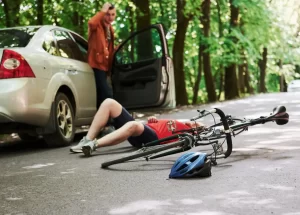
If a teen is injured while riding, medical care comes first. After that, document the scene as soon as possible. Save photos of the bike, scooter, board, helmet, road condition, vehicle, license plate, traffic signs, lighting, injuries, and any damaged equipment.
Get witness names, school incident reports, police report numbers, driver and insurance information, and any available video from homes, businesses, buses, dash cams, or school cameras. Delayed symptoms can happen, especially with head, neck, back, knee, wrist, and shoulder injuries.
Ask what they would do if a car does not see them, their phone rings, there is no bike lane, they approach a driveway, or they are running late.
Parents should move beyond reminders and ask scenario questions. Ask what the teen would do if a car does not see them, if their phone rings, where they would ride without a bike lane, what they would do near a driveway, and how they would handle being late. Their answers can reveal whether they are ready to make safe decisions on the road.
California rules generally require riders under 18 to wear a properly fitted and fastened bicycle helmet when riding bicycles, e-bikes, and electric scooters.
California helmet rules depend on the device and setting, but CHP guidance explains that riders under 18 must wear a properly fitted and fastened bicycle helmet when riding an electric bicycle on a public roadway or bikeway. CHP's scooter guidance also identifies helmet requirements for riders under 18. Families should also check school and local city rules.
Teens should ride in the same direction as traffic, follow signs and signals, stay predictable, and choose routes with lower speeds when possible.
When there is no bike lane, the safest option depends on the road, traffic speed, local rules, and the rider's skill. NHTSA encourages riders to travel in the same direction as traffic, obey signs and signals, ride predictably, and plan routes with less traffic and slower speeds when possible. Parents can help teens choose safer routes before the school routine starts.
Drivers backing out may not see a bike, scooter, skateboard, or e-bike approaching, especially if the rider is moving quickly or hidden by parked cars.
Driveways are risky because drivers may be focused on cars in the street and may not notice a teen rider coming from the side. Parked cars, fences, landscaping, speed, and distractions can make visibility worse. Teen riders should slow down near driveways, scan for reversing vehicles, and try to make eye contact with drivers when possible.
Save photos, driver information, witness names, police or school reports, medical records, helmet and equipment damage, and any available video.
Families should document the vehicle, license plate, driver and insurance information, bike or scooter damage, helmet damage, road condition, traffic signs, lighting, visible injuries, witnesses, police report number, school incident report, and medical care. Video from nearby homes, businesses, buses, dash cams, or school cameras may also matter and should be preserved quickly.
Check your helmet, brakes, tires, handlebars, lights, reflectors, and battery charge.
Before riding, check your helmet fit, brakes, tires, handlebars, lights, reflectors, and battery charge. Make sure clothing, bags, and loose items cannot interfere with wheels or handlebars.
Tips for safer bike, e-bike, and scooter rides during summer, plus what to document after a crash.
View detailsSimple summer safety tips for road trips, pools, parks, bikes, scooters, grills, and fireworks in California.
View detailsA practical parent checklist for what to watch for, what to document, what to ask doctors, and why child injury claims should not be rushed after an accident.
View detailsPrepare for driving in the rain in California with a checklist for visibility, wet roads, hydroplaning, flooded streets and records to save after a crash.
View detailsA morning in San Dimas brought our team together with the community in support of McKinley’s work with foster children.
View detailsBridgewater Law Group will be attending a free backpack and school supply giveaway for local families in Downey.
View details
Bridgewater Law Group can help families understand their options after a traffic-related injury involving a teen rider, negligent driver, unsafe road condition, or defective equipment.
5.0 rating on Google, Yelp & Facebook
This resource is for general information only and does not create an attorney-client relationship. Bike, e-bike, scooter, skateboard, and pedestrian injury claims depend on the facts, local rules, available evidence, and California law.