ACCIDENT INSIGHTS · A PRACTICAL FIELD GUIDE
The Other Driver Won’t Share Insurance Information. What Should I Do?
The other driver says they cannot find their insurance card, refuses to show it, or wants to leave before you finish exchanging details. You do not need to win an argument at the roadside. Focus on safety, record what you can, and explain the missing information when you report the collision.
01 / SAFETY FIRST
What should you do first?
Stay in a safe location. Call 911 for injuries or an immediate threat. Do not block the other vehicle, chase the driver, or reach into their car to retrieve paperwork. If the situation is becoming confrontational, step away and contact law enforcement.
California DMV says evidence of insurance must be provided when a vehicle is involved in a collision. A refusal to provide it is worth documenting, but it does not by itself tell you whether a policy exists. See the DMV’s insurance requirements.
02 / THE CONVERSATION
Ask once, clearly, and record the response
A simple request is enough: “Can we exchange our names, contact information, and insurance details?” If the driver says the card is on their phone, allow them to find it without turning the exchange into a confrontation.
In your notes, distinguish what happened from what you assumed. “Driver said they could not find their insurance card” is different from “driver had no insurance.” If you do not remember the exact words, summarize them without quotation marks.

03 / YOUR RECORD
Create a short missing-information record
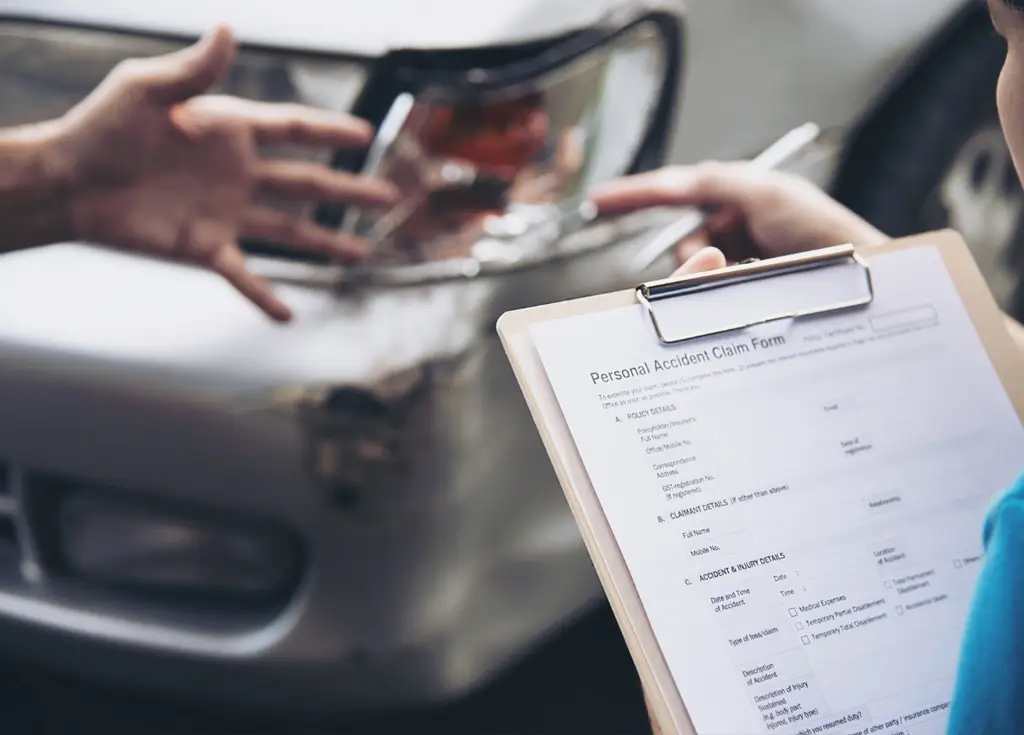
If it is safe, collect the vehicle’s plate, make, model, and color; the time and location; scene photos; and witness contact details. The California Department of Insurance’s accident checklist describes the information to gather and recommends notifying your insurer promptly.
- What I have: list the details and photos you collected.
- What is missing: identify the insurer, policy number, driver name, or other unavailable details.
- What happened: briefly describe the request and response.
- Who I contacted: record the agency or insurer, date, and reference number.
Leave unknown details marked “unknown.” Do not guess a policy number or a full plate from a partial observation.
04 / REPORTING
Report the accident with the information available
Tell your insurer which details are missing and ask how to submit additional information later. Keep a copy of what you send. A claim number and a dated record of the conversation will make follow-up easier.
Drivers should also check their separate DMV reporting obligation. DMV requires an SR-1 within 10 days when a collision involves injury, death, or property damage over $1,000. That report is separate from reports to police or an insurer. Use the official SR-1 instructions and seek help with missing details rather than inventing them.
05 / RELATED GUIDE
What if the driver leaves?
Record the direction of travel and what you actually saw, without following the vehicle. Our California hit-and-run guide explains the broader process, including witnesses, nearby cameras, and insurance questions.
If you were injured and need help understanding the next steps, contact Bridgewater Law Group or call (626) 733-4100.